
Platform
Autonomous ground vehicles built from high-volume automotive parts.
Fielded
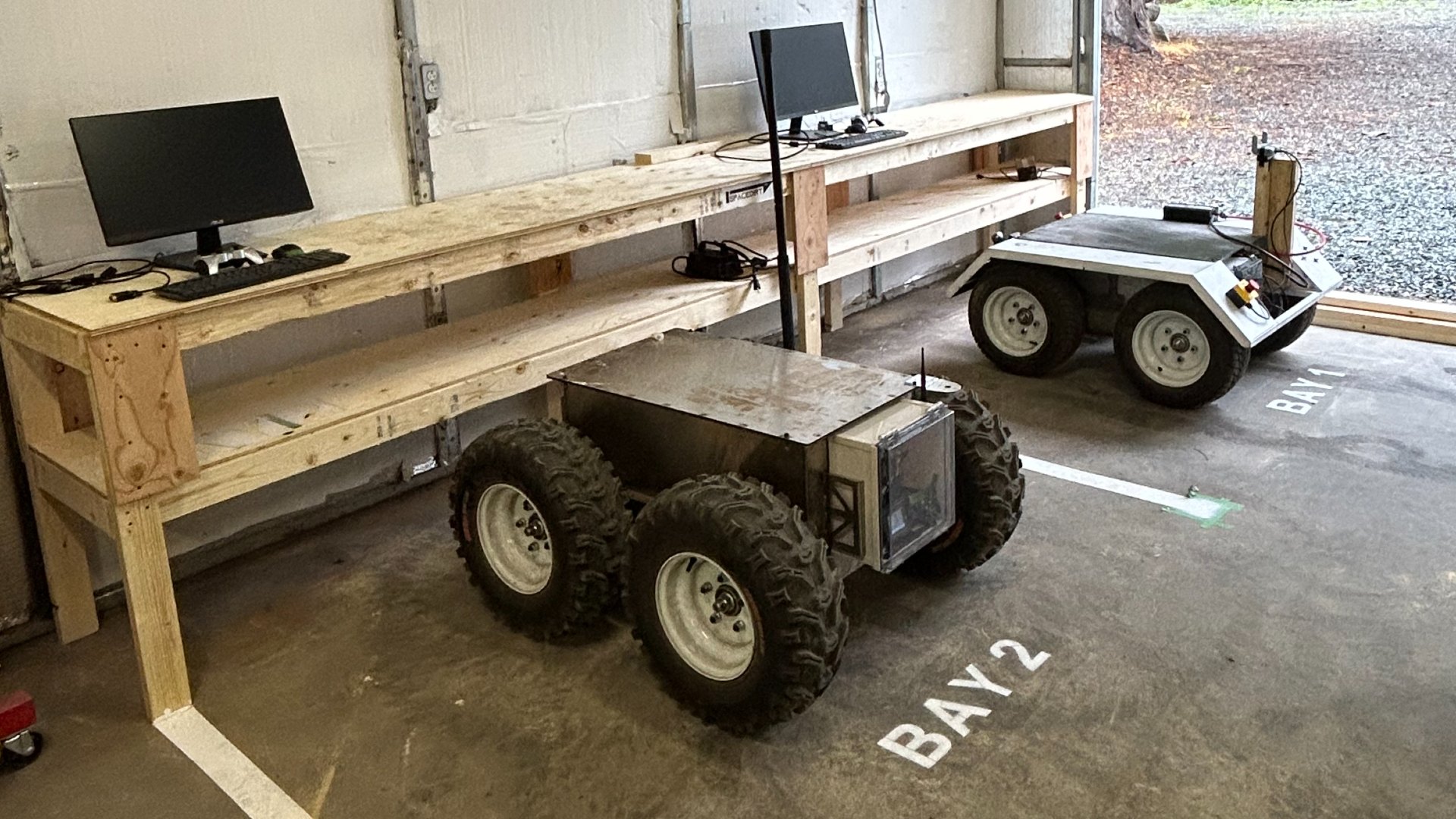
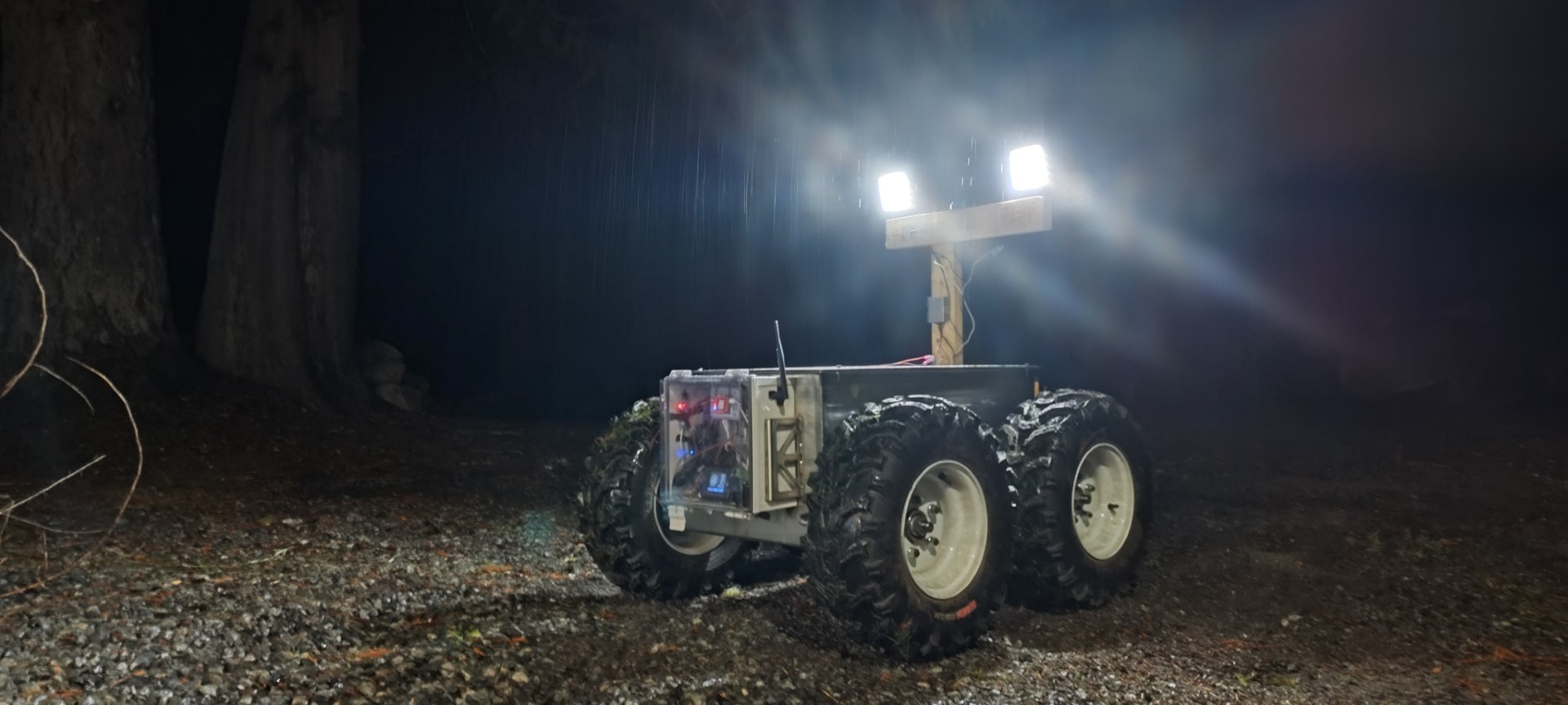
SLED75
Four-wheel autonomous rover
A compact four-wheel-drive rover on an automotive driveline and battery modules, built for reliability and easy service. Driven by an operator or following waypoints on its own.
- 1.0 × 1.2 m
- Footprint
- 4 driven
- Wheels
- Automotive
- Driveline
- 300 kg
- Drill payload demonstrated
Autonomy
An operator sets a path on a map and a fence around it, then sends the plan to the rover. The rover drives the route on its own.
- 9,969 m
- Driven hands-free
- 93
- Hands-free laps
- 5,087 m
- Longest run
- 164 Wh/km
- Energy
SLED001, October 8, 20 and 21, 2026. Hands-free runs only. Longest run: three back-to-back runs on October 21, each ended by its timer.
Ground control
One screen shows the camera, speed, radio round trip and the state of all four drives.
- 50 Hz
- Command rate
- 10 ms
- Radio round trip, median
- 99.93%
- Commands on time
Field tests, October 2026.
In Development
SLED150-M
Uncrewed ground system for cargo delivery and resupply
CAD model in military paint.
The militarized evolution of the fielded SLED75. It keeps the same drivetrain architecture, software and power systems, with upgrades for speed and stationary power. Simple, robust, field-repairable with hand tools, and built from high-volume automotive parts.
- 200 kg
- Payload
- 500 kg
- Towing, level ground
- 15.5 km/h
- Speed
- Over 4 h
- Continuous drive
Platform
- Dimensions (LWH)
- 2.0 × 1.9 × 0.5 m; 27 in (686 mm) wheels
- Mass
- 295 kg unladen; 495 kg gross vehicle weight
- Drive
- 4 × 1,500 W NEMA42 BLDC hub-driven wheels, planetary gearboxes rated over 200 Nm per corner, automotive hubs and splined shafting
- Speed / endurance
- 15.5 km/h (3,000 RPM at 25:1 gear ratio, 27 in wheels); over 4 h continuous drive; 65 h stationary standby at −20 °C
- Mobility
- 20% grade at full load (495 kg), 15% side slope, 250 mm vertical step, skid-steer turning
- Battery
- 44.4 V, 15 kWh, 2 × VDA590-format modules (338 Ah), heated, multi-bay charger
- Environment
- −20 to +40 °C operating, heated battery, sealed IP65 enclosures
- Compute / nav
- NVIDIA Jetson, u-blox ZED-F9R RTK GNSS with IMU
- Control modes
- Direct teleoperation and waypoint following, with vision-based obstacle detection
Cargo, control and interfaces
- Cargo bed
- Flat deck, 1,500 × 1,050 mm (1,250 × 1,050 mm clear between lashing rails), loaded from either side or over the tail
- Payload
- Up to 200 kg carried in a 1,500 × 1,050 × 1,000 mm envelope; 300 kg drill package demonstrated on the SLED75
- Towing
- Up to 500 kg on level ground (275 kg on 20% grades) via NATO standard 76.2 mm tow hook
- Payload power
- 24 V bus, 960 W converter available at the bed
- Payload data
- Ethernet, CAN and Modbus interfaces to the vehicle computer
- Teleop vision
- Wide-angle automotive USB (UVC) day cameras front and rear; passive low-light night cameras (IR illumination optional); vision-based obstacle detection fused with four automotive short-range radars
- Radio
- Microhard radio, 5 km control-and-video link via remote antenna node on a 10 m mast, 100 m from the GCS
- Mesh
- Each vehicle is a mesh node; a second SLED150-M relays for the first and extends reach
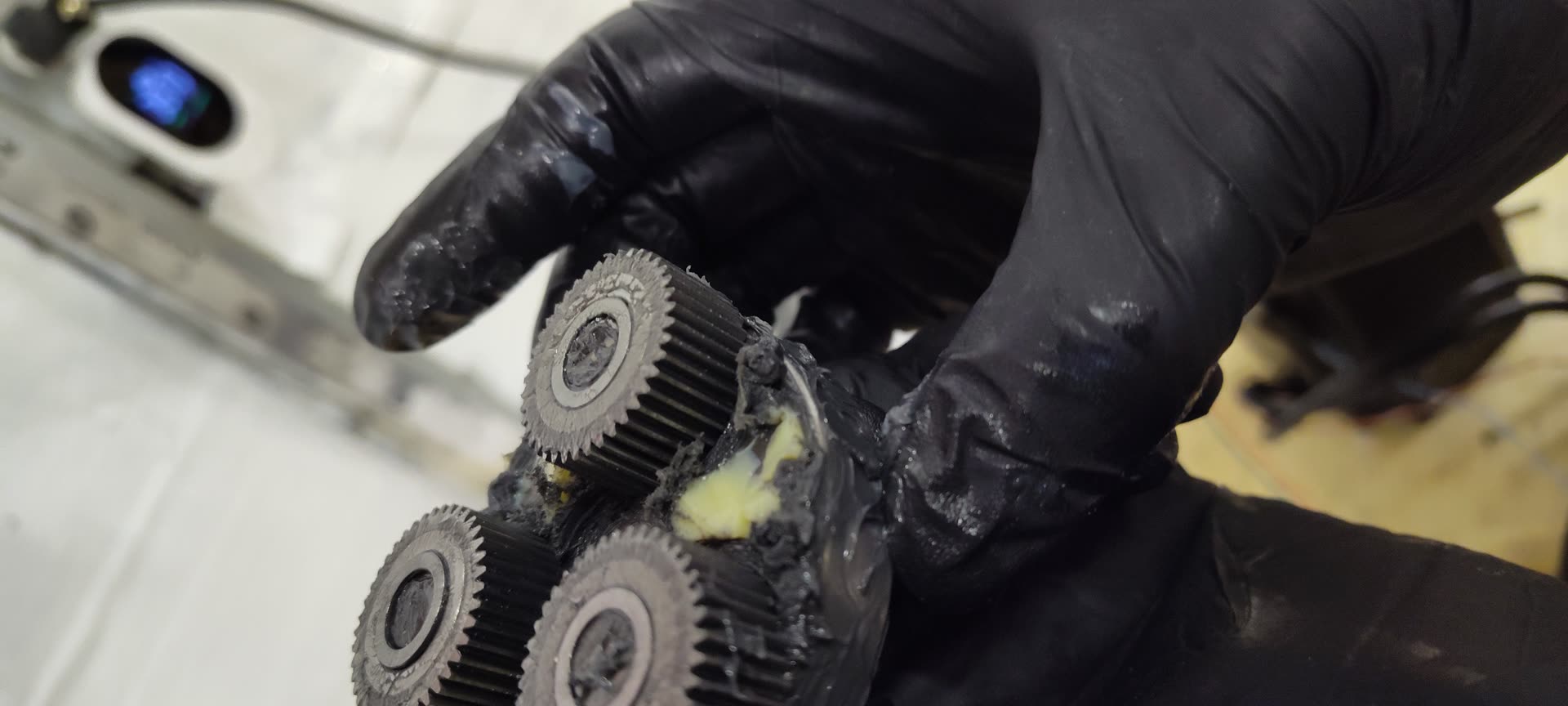
Cold testing
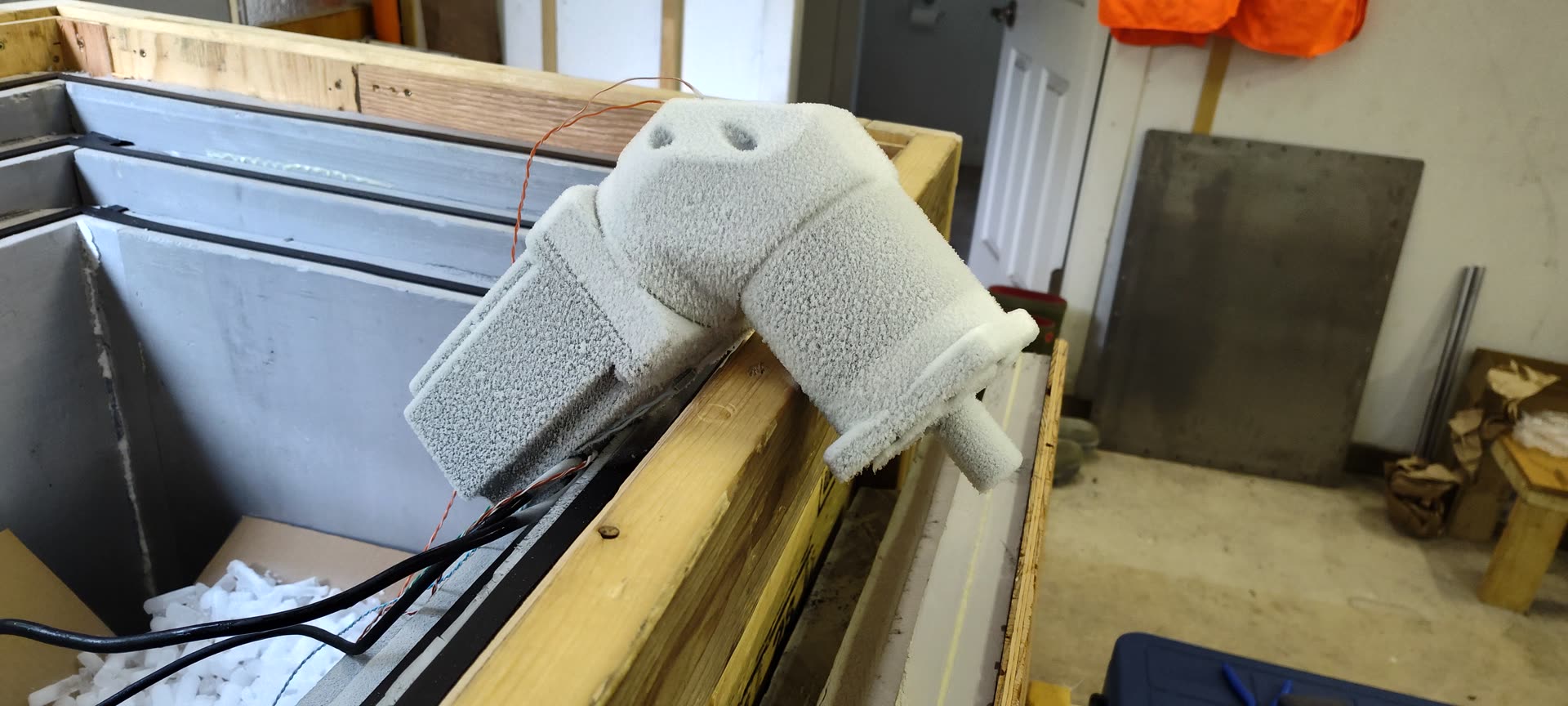
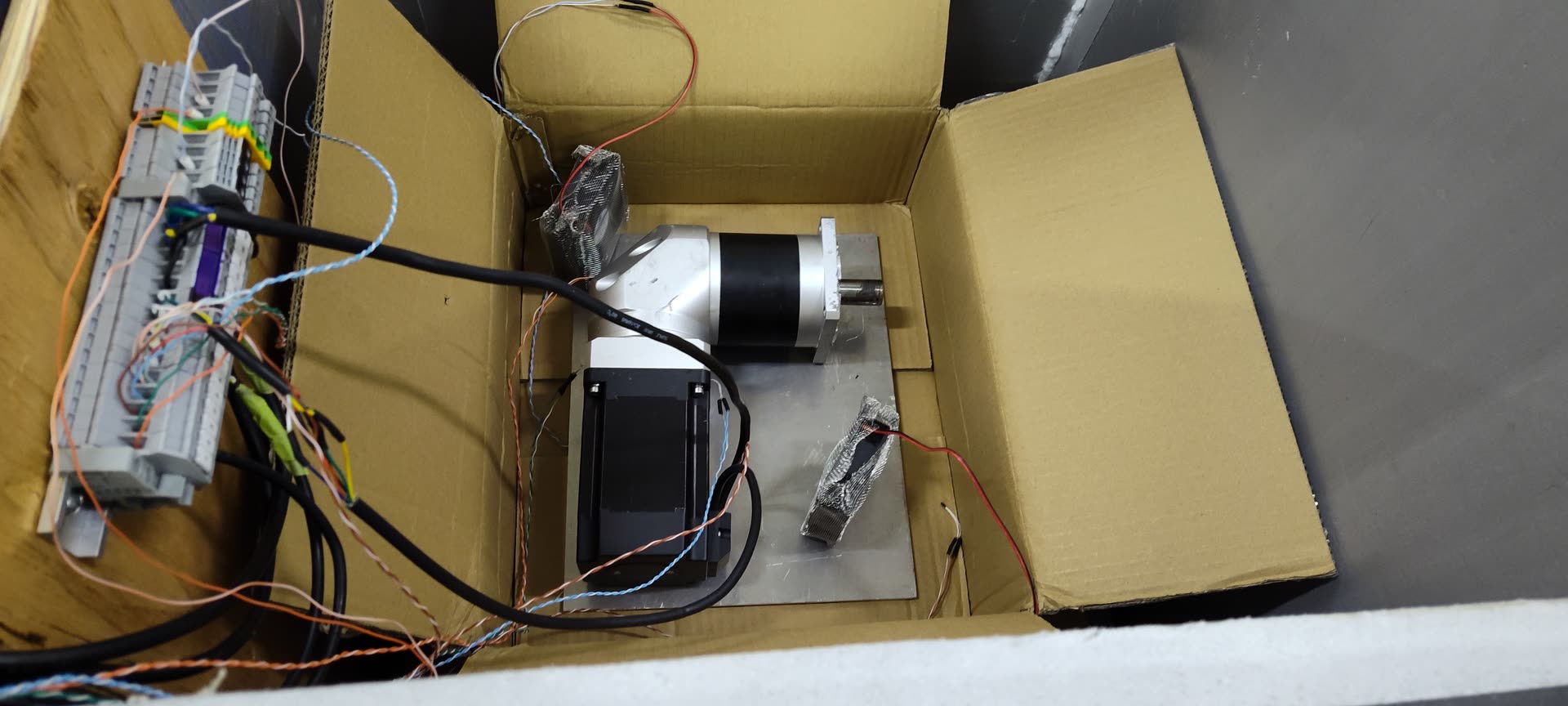
Early qualification of our gearbox and motor system for Arctic temperatures, in a −75 °C chamber we built ourselves. Motors go to lunar night temperatures next.
- −75 °C
- Test chamber
- 8 cu ft
- Built in house
Gearbox test, October 29, 2026. Photos and video: Victor Kind.